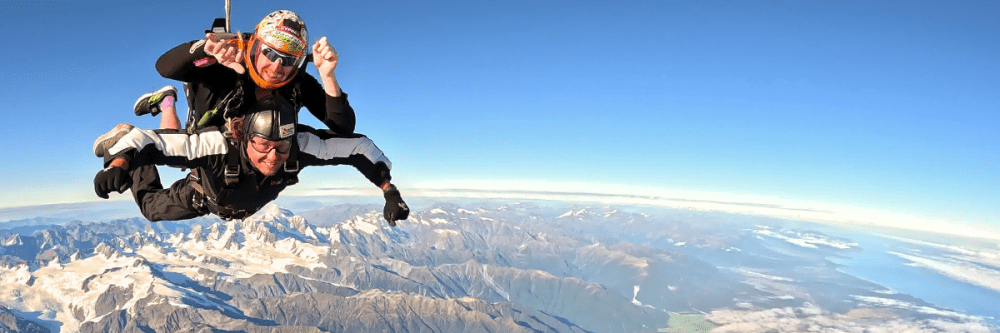

AUTUMN SKYDIVING ON THE WEST COAST: WHAT TO WEAR
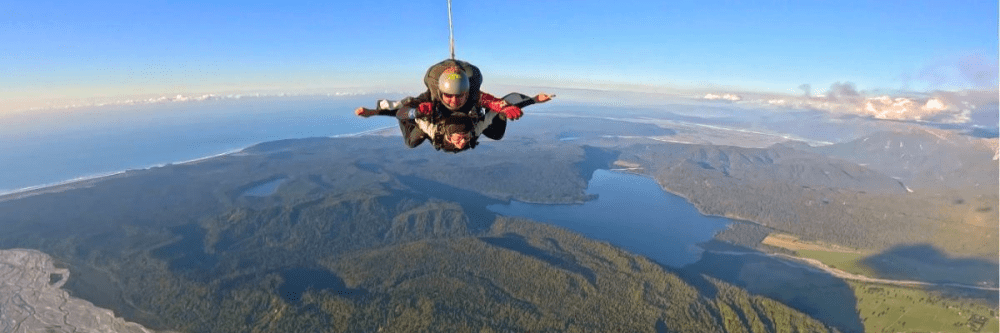
Glacier valleys, rainforest, and the Tasman Sea stretching to the horizon, autumn on the West Coast is crisp, clear, and made for skydiving. The light is sharper, the crowds are lighter, and the air carries just enough bite to keep you alert as the aircraft door opens.
If you’re wondering what to wear for your tandem skydive in Franz Josef or Fox Glacier, here’s your straightforward, locally-tuned guide from Skydive Franz Josef, built for comfort, movement, and the realities of West Coast weather.
Quick Answer: What Should I Wear Skydiving in Autumn?
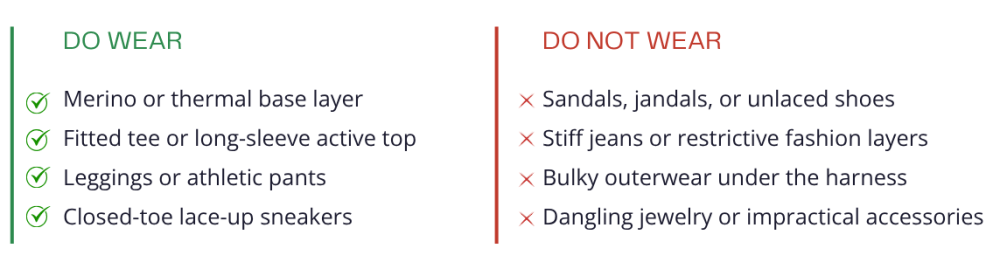
Wear fitted activewear, a merino or thermal layer when the morning is cool, and closed-toe lace-up sneakers. Bring a lightweight rain jacket for waiting periods on the ground, but avoid dressing so heavily that you feel bulky once the harness and jumpsuit go on.
That’s it. The goal is to stay comfortable from check-in to landing and not to dress for extreme cold or add unnecessary bulky clothing.
The Ideal Autumn Skydive Outfit
West Coast weather shifts quickly between ocean influence and alpine air. That is why the best outfit is not the heaviest outfit. It is the one that stays comfortable at the drop zone, during the climb to altitude, but it also works with the jumpsuit, harness and strong wind once the aircraft door opens.
Think streamlined and secure. You’re layering for movement, not bulk, everything should sit comfortably under your jumpsuit and harness. The key is fit, flexibility, and footwear. If it moves easily on the ground, it’ll work in the air.
Why Layering Matters on the NZ West Coast
From sea level to alpine air, conditions here can shift quickly. You might feel mild temperatures at the drop zone, then cooler air on the climb to altitude, followed by strong wind in freefall.
The best outfit isn’t the warmest, it’s the most adaptable.
- Pre-jump briefing
- Aircraft ascent
- Freefall at speed
- Calm canopy flight
- Instructor-led landing
What it Actually Feels Like Up There
A lot of first-time jumpers expect a freezing drop. In reality, it’s more dynamic than that. Here’s the sequence:
- Aircraft Climb: Views expand, nerves usually settle, and cooler air becomes more noticeable before the jump.
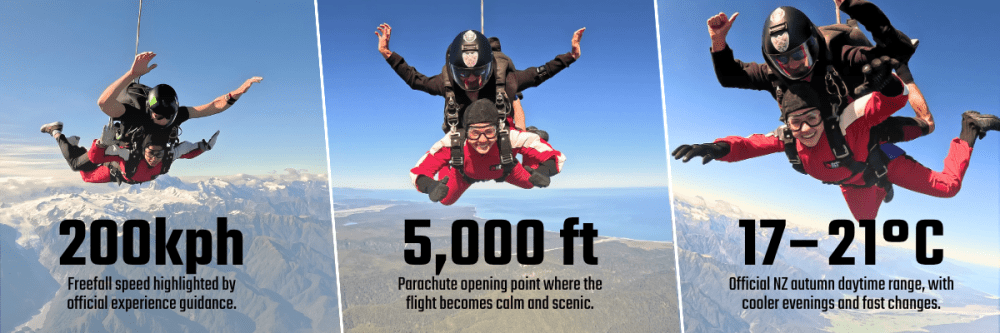
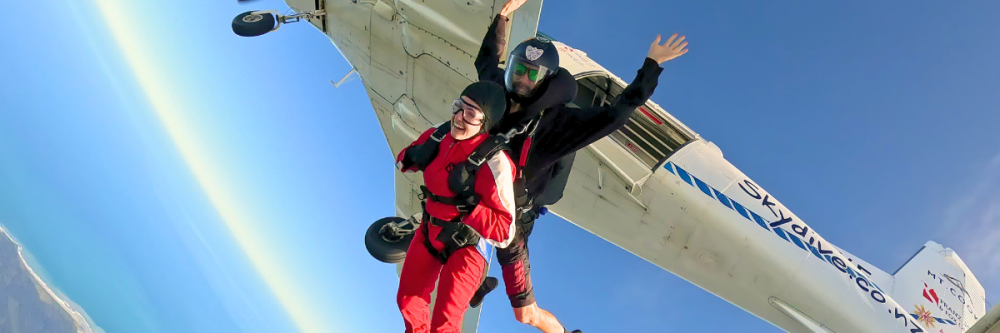
- Freefall (200km/h): Fast, Loud and exhilirating, the airflow feels supportive rather than like a drop. Goggles protect your eyes, and fitted clothing reduces drag.
- Canopy Flight (approx 5,000ft): Everything slows. It gets quiet, scenic, and surprisingly peaceful.
- Landing: You will lift your legs for a soft instructor-led landing, which is where secure lace-up shoes matter most.
What Skydive Franz & Fox Provides
You don’t need to bring technical gear, we’ve got that covered. On jump day, you’ll be equipped with:
- Jumpsuit – worn over your clothing
- Harness – professionally fitted for each guest
- Hat and goggles – for comfort and protection in freefall
All Skydive New Zealand operations are conducted under CAA Part 115 regulations, with safety overseen through Inflite Group standards. That means your experience is built on proven systems, experienced instructors, and well-maintained equipment.
Autumn Skydiving: Why It’s a Great Time to Jump
Autumn on the West Coast hits a sweet spot for skydiving with:
- Fewer crowds than peak summer
- Sharper visibility on clear days
- Comfortable daytime temperatures (typically 17–21°C nationally)
- Cooler mornings and evenings perfect for layering
Essential Packing List
No need for a giant gear bag. We provide most of the required clothing and you can just bring the basics:
What to Bring:
- Merino or thermal top
- Athletic pants or leggings
- Fitted long-sleeve top or tee
- Closed-toe lace-up sneakers
- Lightweight rain jacket
- Spare socks
- Sunglasses
- Sunscreen
- Water bottle
- Hair tie for long hair
What We Provide:
- Jumpsuit- A practical outer layer that works with your underlying clothing rather than replacing the need for smart layering.
- Harness – Professionally fitted equipment that is why bulky, restrictive clothing is best avoided.
- Hat – Included as part of gearing up before the jump according to official jump-day guidance.
- Goggles – Essential eye protection in the wind, and official operator guidance says they can fit over prescription glasses.
THE MOST IMPORTANT ITEM: Your shoes.
Secure, lace-up sneakers are more important than any extra layer. They stay snug in freefall and support a smooth landing.
FAQs: What to Wear for Skydiving
Question: What should I wear skydiving in Franz Josef during autumn?
Short answer: Wear comfortable fitted layers, secure lace-up sneakers, and a merino or thermal base layer if the day is cool. The safest approach is to dress for movement and flexibility rather than bulk.
Question: What does Skydive Franz Josef provide?
Short answer: Official jump-day guidance says the team gears you up in a jumpsuit, harness, hat, and goggles, so your own clothing only needs to work well underneath that equipment.
Question: Will it feel colder in the air than on the ground?
Short answer: Yes. The aircraft climb and wind exposure make the experience feel cooler than the village forecast alone suggests, which is why an autumn base layer is a practical choice.
Question: Can I wear glasses or contact lenses?
Short answer: Yes. Skydive New Zealand states that prescription glasses are allowed and that goggles can fit comfortably over them.
Question: What happens if the weather changes?
Short answer: Weather pauses are normal in New Zealand. Skydive Franz Josef says the team will contact guests if weather issues are expected and can rebook on the spot or issue a full refund if another day is not possible.
Question: Should I eat before a tandem skydive?
Short answer: Yes. Official first-time skydiver advice from the operator group recommends a normal light meal beforehand rather than arriving on an empty stomach.