

ESSENTIAL TIPS FOR FIRST-TIME SKYDIVERS
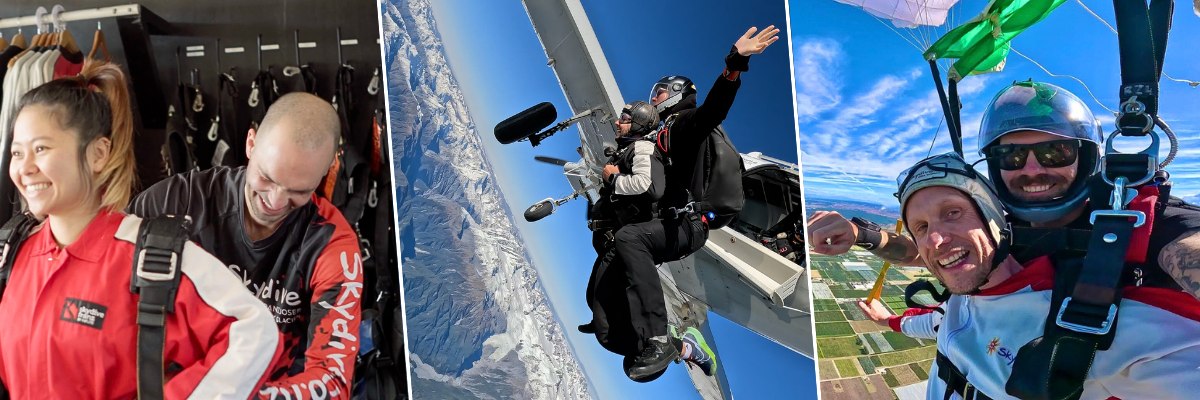
Before you picture yourself at the edge of an airplane door, one practical question usually pops up: are there any restrictions and am I even eligible to do this? The good news is that the requirements for a first-time tandem skydive are simpler than most people imagine. They’re not about being a top athlete; they’re about ensuring a safe and predictable experience for everyone.
Suitability criteria for Skydiving in New Zealand are structured around weight, size and physical fitness. A parachute is certified for a maximum total weight, which includes you, your expert instructor, and about 23 kgs of gear, ensuring the equipment works exactly as designed. If a passenger weighs more than 100kgs, they’ll go through a pre-assessment on the day of the jump to ensure their safety stays the top priority.
There’s no maximum age for tandem skydiving, we simply ask that you’re in good health. If you have any serious medical conditions, our team will chat with you on the day to make sure it’s safe and comfortable for you to jump.
Most NZ operators require a minimum weight of around 30kg – 40kg to ensure a safe harness fit for younger passengers. Proper fit is essential and our team will check harness suitability on the day before confirming the jump. All minors need written consent from a legal guardian or parent, and children under the age of 16 are limited to low altitude where supplementary oxygen won’t be required. It is also recommended that younger skydivers have a guardian to jump with them, especially if English is not their first language.
How to Prepare Your Body the Day Before Your Jump
Your physical preparation for the big day is surprisingly simple and starts with your stomach, like most important decisions in life. While it might seem smart to jump on an empty stomach, this is one of the most common mistakes first-time skydivers make. Be sure to eat a normal, light meal before you head out. Having some food in your system helps stabilize your energy levels and manage the rush of adrenaline.
On that note, while staying hydrated with water is a great idea, it is also recommended to avoid alcohol for at least eight hours before your jump. This way you can ensure you feel sharp and present for this memorable experience.
Perhaps the most important tip on any first-time skydiving checklist is simply to get a good night’s sleep. A well-rested mind is far better at processing excitement and managing nerves. You’re about to tick something exciting off your bucket list and feeling your best is the first step toward enjoying every second of it.
What to Wear for Tandem Skydiving (And What to Leave on the Ground)
Deciding what to wear for tandem skydiving is easier than most special occasions. The golden rule is to dress for comfort and movement, as if you were going for a light hike or to the gym. Most drop zones will provide a fashionable jumpsuit to wear over your clothes, but what you wear underneath is key to feeling comfortable throughout the day.
For a hassle-free experience, stick to this simple guide.
- Do Wear: Athletic pants or shorts, a T-shirt or long-sleeved shirt, and most importantly, lace-up sneakers.
- Don’t Wear: Stiff jeans, dresses or skirts, any shoes without laces (like sandals or boots), or dangling jewelry that could get lost or snagged.
The single most important part of your outfit is your shoes. You’ll need secure, closed-toe sneakers to protect your feet when landing. A shoe flying off at 120 mph is a bad day for everyone! With your outfit sorted, you’re ready for the next step.
Prescription glasses are allowed, and we’ll provide goggles that fit comfortably over them for your jump.
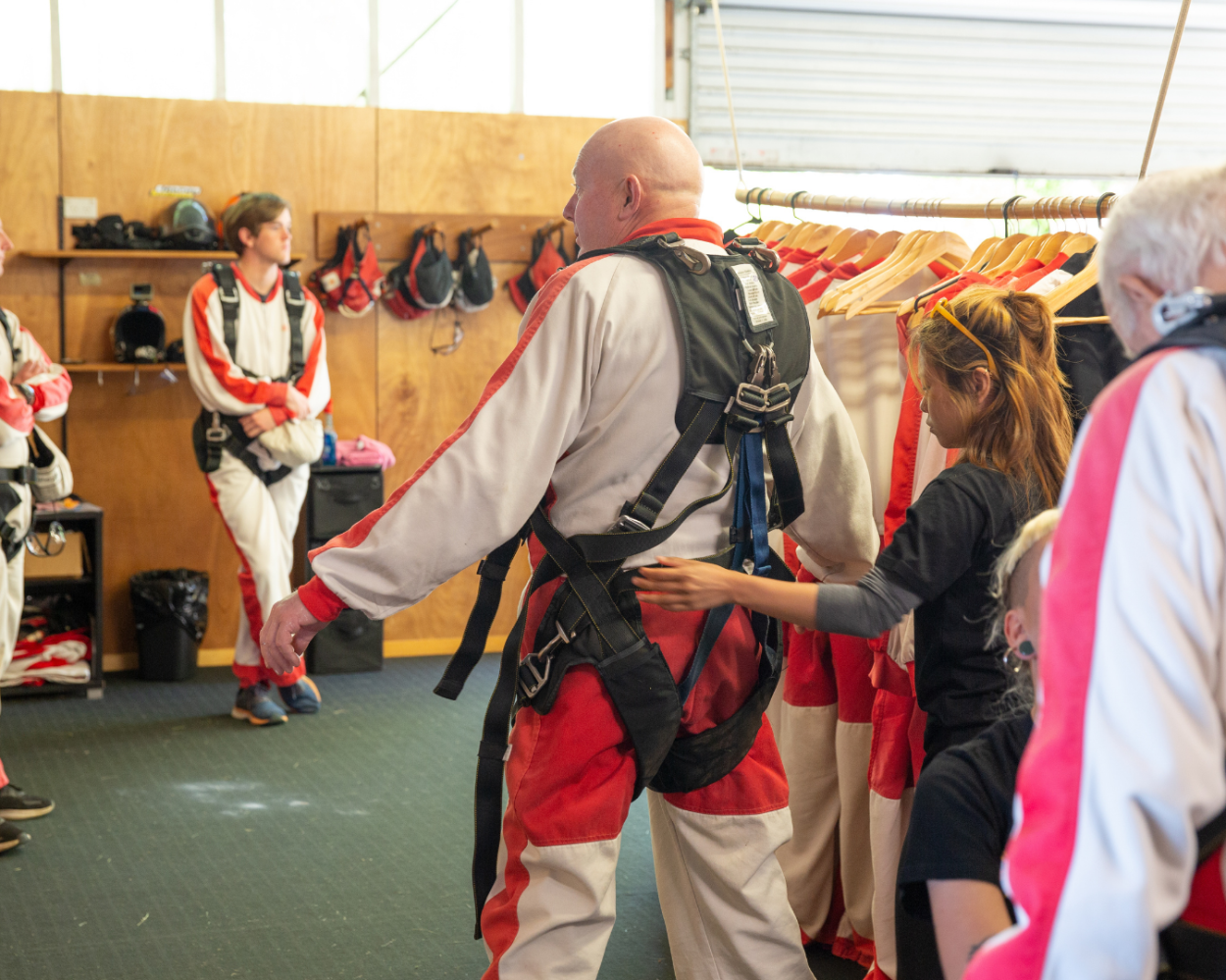
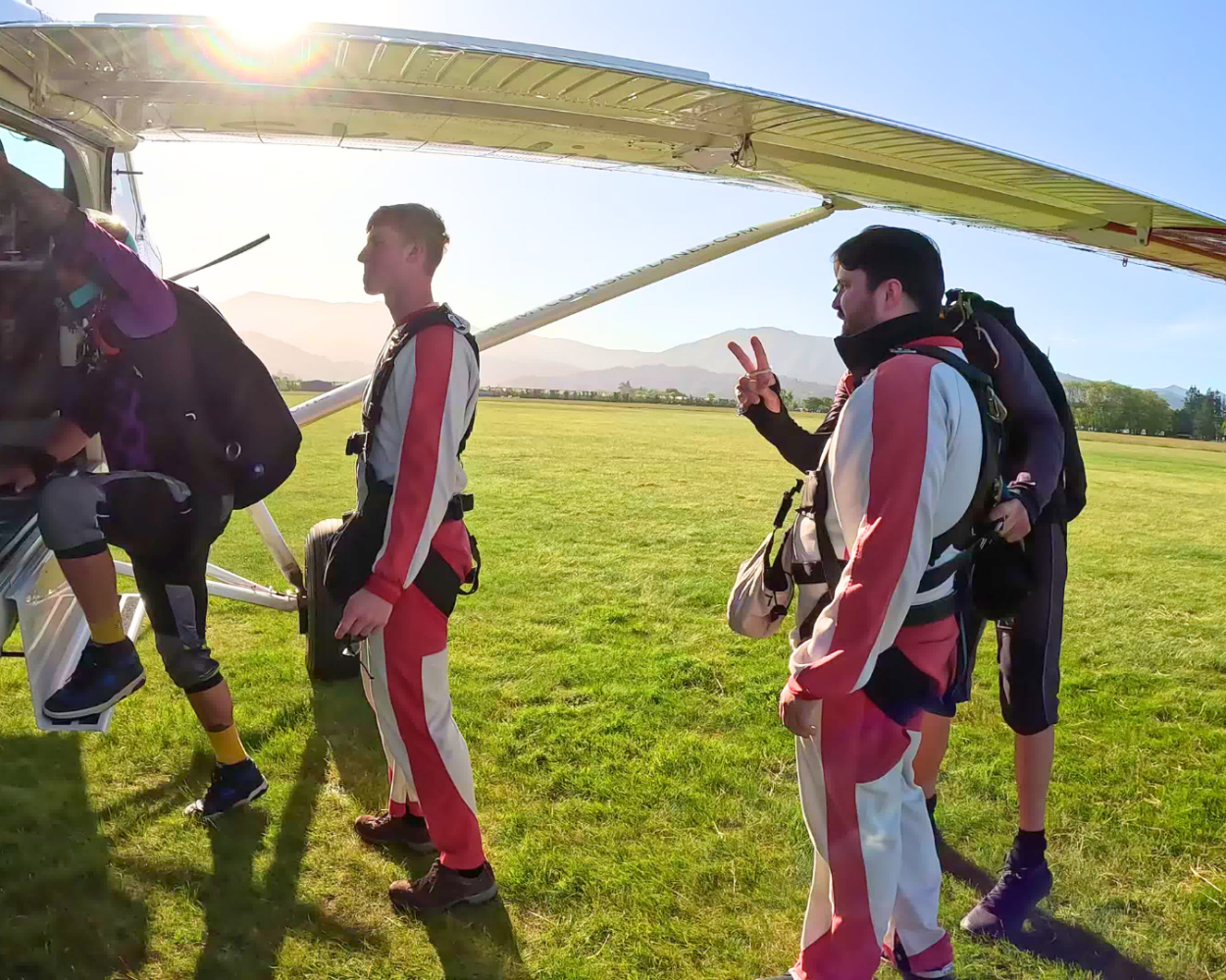
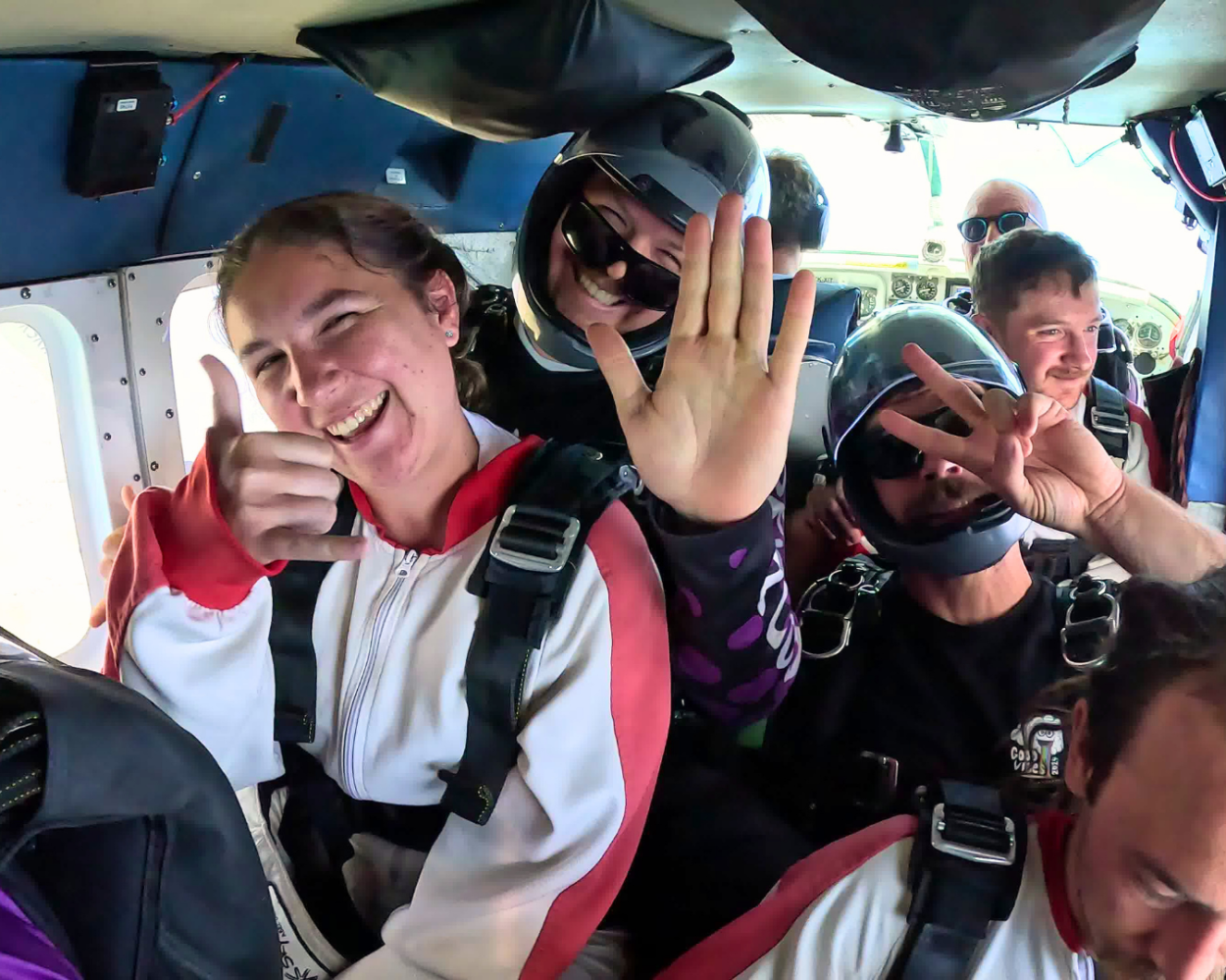
Your First 30 Minutes at the Drop zone: Demystifying the Arrival
Once you arrive at the office or drop zone (the skydiving airport), your first step will be to check-in. This involves some routine paperwork, including a standard legal waiver. It’s a normal part of any adventure sport and as soon as you get the logistics out of the way you’ll be able to focus on the experience.
Skydiving is completely dependent on safe weather, so pauses for wind or clouds are both normal and a good sign – this means that there might sometimes be a bit of waiting around, but luckily you’ll know that the team puts your safety first. This is your chance to relax, watch other jumpers land, and soak in the exciting atmosphere.
Finally, you’ll meet the most important person of your day: your Tandem Instructor. This is a highly qualified professional, often with thousands of jumps under their belt. They are your expert guide for the entire journey, responsible for everything from the gear to getting you safely back on the ground. You are literally attached to an expert.
The 10-Minute Briefing: Your Only Two Jobs for the Entire Skydive
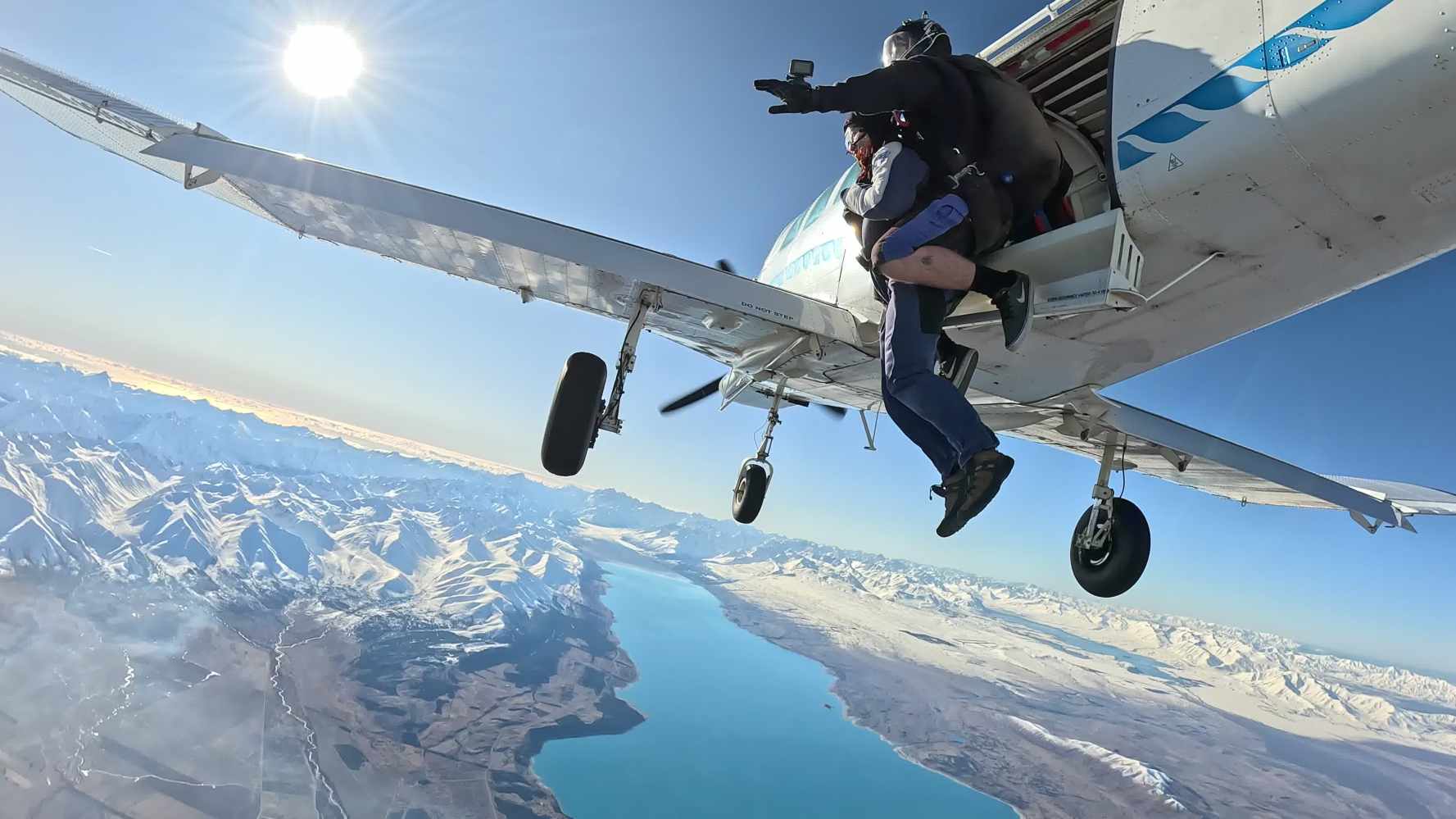
Following your introduction, your instructor will give you a quick briefing. Your main job will be to hold a body position called the “arch” during the jump and freefall – think of making a gentle banana shape by pushing your hips forward. This simple posture creates stability, but you can ask them all the questions you have even before boarding the plane. Many people overthink this, but before you know it, you’ll fly like a natural.
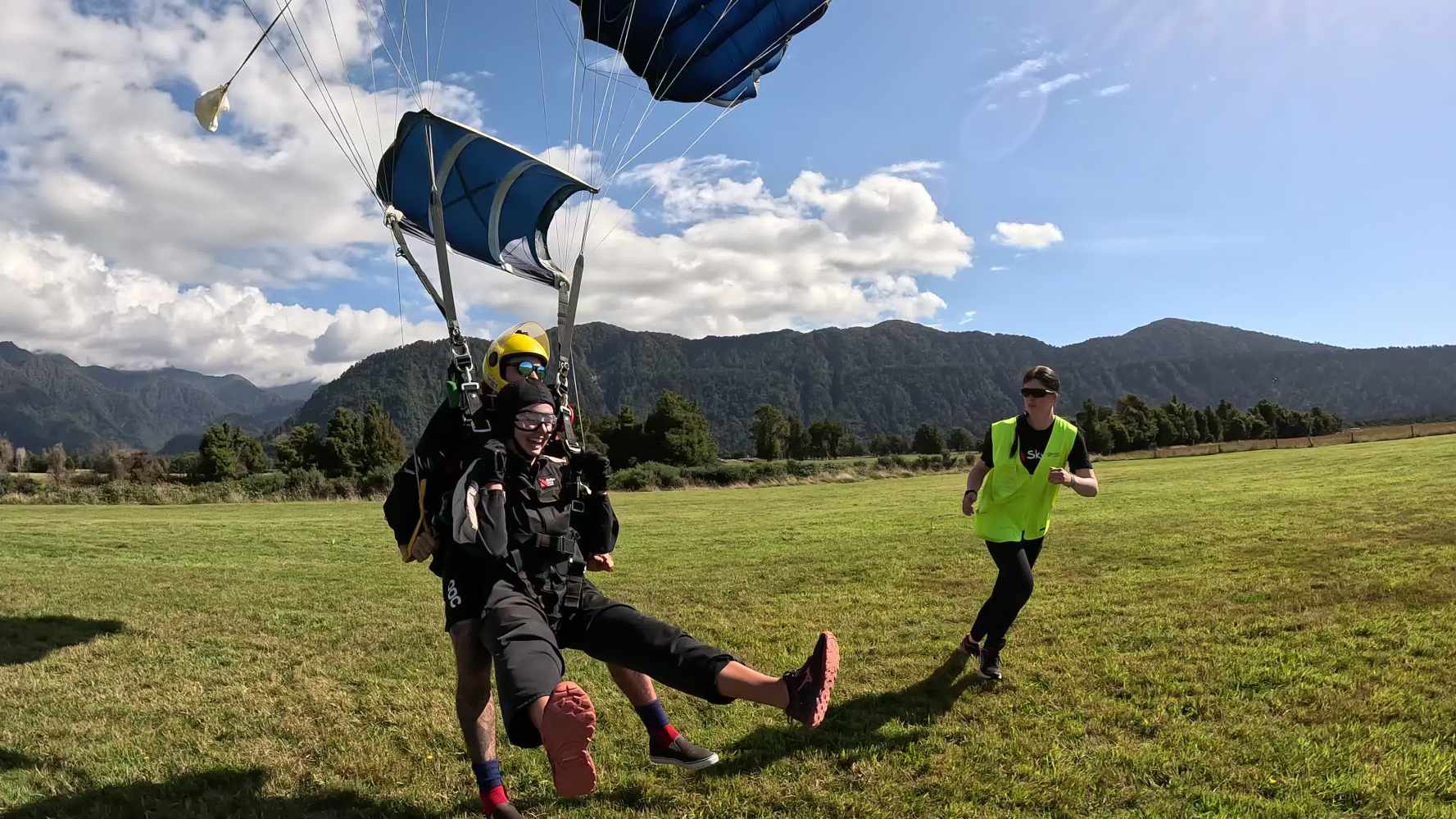
Your only other task comes at the very end. For a soft landing, you will simply lift your legs straight out and up. This allows your instructor’s feet to touch the ground first, ensuring a smooth, often sliding, finish to your jump. Knowing how to land during a tandem skydive really is that straightforward and another part your tandem instructor will ensure you are comfortable with before the landing.
And that’s it. Arch for freefall and then legs up for landing. Your instructor is in charge of every other step in the tandem skydiving process, from the gear to deploying the parachute. Your role is simple by design so you can relax and focus on the incredible experience.
What Does Freefall Actually Feel Like? (Hint: It’s Not Falling)
The biggest fear for most first-timers is that stomach-lurching drop you get on a rollercoaster. But skydiving feels nothing like that. Since you’re exiting a plane already moving forward at high speed, you don’t ‘drop’ – you smoothly transition onto a powerful cushion of air. The sensation is one of flying forward, not plummeting down, which is key to overcoming skydiving anxiety.
After a few seconds of acceleration, the wind pressure below you will perfectly match your superhuman speed, creating a feeling of floating, not falling. And this is what freefall feels like. You’re being supported by a solid column of wind, free to relax and take in the incredible 360-degree view. It’s noisy and windy, but it’s also surprisingly serene; completely in-line with all the dreams you had of flying.
And yes, you’ll be able to breathe! The wind is loud, like sticking your head out of a car window on the motorway, but it won’t steal your breath. Just relax and breathe normally. Your body knows exactly what to do, so let the worries go, and feel free to simply enjoy the moment.
You’re Ready to Fly: Taking the Leap from Nervous to Confident
The thought of jumping from a plane was once a big question mark. Now, you’re armed with essential tips for first-time skydivers. You know everything from what to wear to the incredible feeling of floating – not falling – through the sky. You’ve gone from being a curious spectator to a prepared participant.
Remember the core truths of tandem skydiving: you are attached to an expert who handles all the technical work. Your entire job is to listen and follow their simple instructions. If you forget they’ll remind you to arch, enjoy the view, and lift your legs for the landing. That’s it. You have the knowledge to trust the process and your instructor completely.
Your mental “skydiving first time checklist” is now complete. The fear of the unknown has been replaced by the thrill of a manageable adventure. All that’s left is to take that final, simple step: find a certified drop zone and the best views and book the memory of a lifetime.